Collecting Japanese Pokémon cards: what to know before you buy
Booster boxes with 10 to 30 packs, rarities like AR and SAR, buying on Cardmarket instead of importing: what to know before your first Japanese Pokémon cards.
 Claudy· Guides & Tutorials
Japanese Pokémon cards come in their own sets, with their own rarity codes and differently built booster packs and booster boxes (the cartons that hold several packs, also called displays). What matters to collectors on top of that is print quality, release timing and where you buy, because you do not have to import every Japanese card from Japan yourself.
Why collectors choose Japanese cards
One reason is build quality. Collectors often rate the print quality of Japanese cards higher than that of English cards, and the gap grows with rarity. Commons and uncommons look nearly identical in both languages; the differences show from RR upward, in other words on the rarer cards.
The most elaborate cards show it most clearly. Japanese SAR cards (Special Art Rare) have deeper texture embossing and a finer-grained holo pattern than their English counterparts.
The boxes look different too: a Japanese booster box shows the artwork of the entire set on the carton, a feature English boxes do not have.
Then there is the head start. Japanese sets typically come out before their English counterparts, so the Japanese release usually gets you new cards sooner. 30th Celebration was an exception and launched on the same day in Japanese and English.
Price plays a part too, especially for sealed boxes. How Japanese and English products compare on price is covered further down in the section on price level.
Booster packs and boxes: the set types
Japanese boxes are built differently depending on the set type. Before you buy a box, check which type its set belongs to:
| Set type | Packs per box | Cards per pack | Cards per box |
|---|---|---|---|
| Standard sets (main sets, enhanced expansion sets) | 30 | 5 | 150 |
| High-class sets | 10 | 10 | 100 |
| Special sets, subsets, side expansions | usually 10 to 20 | 5 to 6 | varies, e.g. 20 packs of 6 cards |
Standard sets are the regular expansions. A box usually contains at least 1 secret rare or SR+ as its box hit, plus art rares. A box hit is an especially rare card from a box. This is an observed pattern, not a guarantee from The Pokémon Company.
High-class sets are annual special sets such as Shiny Treasure, Terastal Festival or Mega Dream. Every pack contains a holo card, and the odds of full-art trainers (trainer cards with artwork across the whole face), gold cards or so-called god packs are higher. A god pack is a booster pack with an unusually high number of rare cards.
Special sets, subsets and side expansions vary in the number of packs per box and cards per pack, so check the details of the specific product before you buy.
For comparison: an English booster pack holds 10 cards and an English booster box 36 packs. Japanese standard packs are therefore much smaller, and the boxes are put together differently as well.
The Japanese rarity ladder
Modern Japanese cards print their rarity as a letter code next to the collector number. C (common), U (uncommon), R (rare) and RR make up most of a pack. AR, SR, SAR, UR and MUR are the chase rarities at the end of the card list.
This is how the main codes line up with English rarities:
| Japanese code | Name | What the card shows | English equivalent |
|---|---|---|---|
| RR | Double Rare | mostly ex Pokémon | Double Rare |
| AR | Art Rare | a Pokémon with a fully illustrated background | Illustration Rare |
| SR | Super Rare | mainly full-art trainers and ex Pokémon | Ultra Rare |
| SAR | Special Art Rare | a Pokémon or character with its own alternate illustration | Special Illustration Rare |
| UR | Ultra Rare | gold ex Pokémon, energy and selected trainers | Hyper Rare |
Watch out for one naming trap: "Ultra Rare" means UR in Japanese, but in English it names the counterpart of SR. When you compare cards across languages, go by the code, not the spelled-out name.
Above UR, the Mega Evolution era adds MUR (Mega Ultra Rare) as the top Japanese rarity. MUR cards exist in English too, for example in Phantasmal Flames. Newer sets keep adding codes: MA (Mega Attack Rare) arrived with M2a, FUR (Futuristic Rare) with 30th Celebration (M6a).
Reverse holos are another difference. These are cards with a shiny surface outside the artwork. Japanese sets usually do not have them; they are kept for promos and special commemorative expansions.
Which Japanese set becomes which English set
Two examples from the Mega Evolution era show how Japanese and English sets relate:
| Japanese set | Released | English set | Date |
|---|---|---|---|
| Inferno X (M2) | 26.09.2025 | Phantasmal Flames (ME02) | 14.11.2025 |
| Mega Dream ex | 28.11.2025 | Ascended Heroes | 30.01.2026 |
Inferno X forms the bulk of Phantasmal Flames, but the English set is bigger: it has 94 cards in its main set, Inferno X has 80. On the rarity side, AR, SR, SAR and MUR in Japanese face IR, FA, SIR and MUR in English.
Mega Dream ex, one of the high-class sets from the set-types section, contains mostly the same cards as Ascended Heroes.
In both examples the English set came after the Japanese one (dates in the table), and it did not simply copy every card one to one. If a card from a new Japanese set catches your eye, it is worth checking whether and in which English set it appears later.
Price level: Japanese versus English
On price, look at sealed products and single cards separately. The Japanese retailer Samurai Sword Tokyo compared prices as of March 2026:
- Booster boxes: Japanese boxes were listed well below English ones.
- Vintage cards: For classics like Base Set Charizard or Neo Genesis Lugia, the English version was listed higher.
Modern singles look different: community price tracking often showed Japanese versions at a premium over English ones. No official source publishes a figure for this.
So before you buy a single, compare both language versions of the same card.
Buying Japanese cards in the EU instead of importing
You can also find Japanese singles on Cardmarket. If the parcel comes from an EU country, you skip customs, because postal and courier shipments within the EU generally travel without customs formalities.
How to find Japanese cards on Cardmarket
Cardmarket keeps Japanese and Western Pokémon cards apart. Every Japanese single has its own product page, and all Japanese expansions carry "JP" in their title banner. So you will not find a Japanese offer on the English card's page; you reach it through the Japanese set.
Cardmarket sorts languages into two groups: Western (English, French, German, Spanish, Italian, Portuguese) and Asian (Japanese, Korean, and Traditional and Simplified Chinese). Asian-language cards follow Japanese numbering and classification, so Japanese is not the only language in that group.
To zero in on Japanese cards, use the language filter: every product page has filters on the left, including language and seller type. Set the language to Japanese before you compare offers. Cardmarket automatically sorts offers from cheapest to most expensive, shipping included.
Above a certain order value, and for the first sales of new sellers, Cardmarket uses its Trustee Service. As a rule, Cardmarket then releases the money to the seller only once you have confirmed that the order arrived.
If you buy a sealed box from a private seller, check it for signs of resealing. Our guide Spotting a resealed booster box shows you how.
What a direct import from Japan involves
An order straight from Japan is a shipment from a non-EU country, and the rules for those changed in 2026. According to German customs (zoll.de), the former duty-free threshold for e-commerce shipments from non-EU countries has no longer applied since 01.07.2026. Certain shipments up to the former value limit now incur a flat customs duty for each category of goods they contain. As things stand, a handling fee (Union Handling Fee) per goods category is set to be added from 01.11.2026, regardless of the value of the goods. Even a small card order can therefore trigger charges.
Import VAT of 19 or 7 percent comes on top. If the seller is registered in the EU VAT system and uses the Import One Stop Shop (IOSS), no additional import VAT is charged at customs for goods up to the IOSS value limit. It is worth asking a shop whether it uses IOSS before you order.
Usually the postal or courier service files the customs declaration and pays the charges in advance. You then pay them to the carrier on delivery, and the carrier may add a service fee. If a shipment ends up at the customs office, a letter is held for 7 days and a parcel for 9 days before it goes back to the sender, so act quickly when customs contacts you.
Do Japanese cards fit standard sleeves?
Yes. A Japanese Pokémon card measures 63 x 88 mm, exactly the size of an English card. Sleeves (protective card covers), toploaders (rigid plastic holders) and binder pages made for English cards fit without any adjustment.
The material differs, though: Japanese card stock is considered thinner and smoother than English stock. That is an observation, not a measured specification. A snug standard-size sleeve is therefore the safer choice over a loose one. For the next steps in protecting your cards, see our guide Storing cards properly.
Card back and tournament play
The back of Japanese cards changed in 2001, when the Japanese game was rebranded as Pokémon Trading Card Game. It differs from the back of all other Pokémon cards.
That has consequences for competitive play. The TCG Tournament Handbook from Play! Pokémon (as of 01.09.2026) therefore classifies Japanese cards as marked, and marked cards may not be played at Play! Pokémon tournaments. Decks mixing card languages are allowed as long as the backs are consistent. At Championship Series events in Europe, English, French, German, Italian, Portuguese and Spanish are legal. For all other tournaments and League sessions, the organizer decides which languages are allowed, but the rule on marked cards applies to all Play! Pokémon tournaments. For game nights outside Play! Pokémon, ask the organizer beforehand.
Grading Japanese cards
Grading means having a service assess a card and seal it in a protective case. On 21.10.2020, CGC announced that CGC Trading Cards grades all standard-size Pokémon cards in all languages, Japanese included.
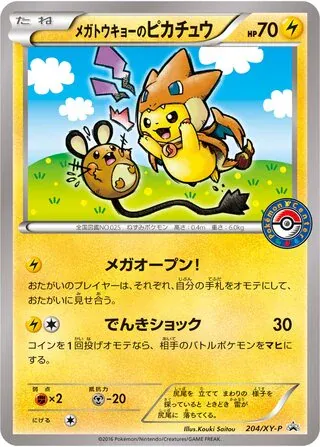
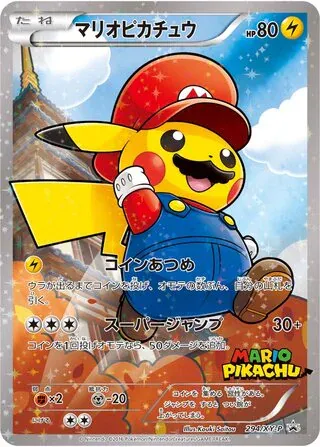
Two limits apply. Some foreign promo cards may be rejected if CGC cannot determine their origin, and new cards that are not yet in the CGC database may delay grading. With Japanese promos like these two from the InSleeve catalog, it is worth checking the conditions first:
What the grades on the label mean is explained in our guide Understanding grading scores. How to tell fake singles from real ones is covered in Spotting fake Pokémon cards.
Updated 23.10.2026: added the Ascended Heroes release date. Previously rebuilt with box sizes per set type, the rarity ladder, set mapping, price level, buying in the EU and sleeve size. High-class sets contain 10 cards per pack.
Sources
Show sources
- Samurai Sword Tokyo: Japanese vs English Pokemon Cards: Every Difference Explained
- SNKRDUNK Magazine: East vs West: Comparing English and Japanese Pokémon TCG Cards
- Samurai Sword Tokyo: Japanese Pokemon Card Rarities Explained
- Elite Fourum: M2 Inferno X / EN ME02 Phantasmal Flames
- CGMagazine: The Next Pokémon TCG Set is Ascended Heroes
- TCGplayer: Ascended Heroes Quick Facts
- Cardmarket: Finding and Listing Pokémon Cards
- Cardmarket: New User Guide
- Zoll online: Sendungen innerhalb der EU
- Zoll online: Internetbestellungen
- Samurai Sword Tokyo: How to Store Japanese Pokemon Cards and PSA Slabs
- Play! Pokémon: TCG Tournament Handbook
- CGC: What Pokémon TCG Cards does CGC Trading Cards Grade?
Card images: InSleeve catalog
Research & data: InSleeve team, AI-assisted, editorially reviewed.
Comments are coming later.